
One of the primary goals of Eye on Main Street is to generate a re-appraisal of Main Street, to encourage people to look again at a place that is often sweetened up in the mind or degraded as an abandoned, useless relic. Fewer and fewer Americans each year are spending time on these once very central corridors of commerce and community. If there is any passing acquaintance at all with Main Street, this (distant) landscape is often flattened and simplified, a cliched sketch from memory or a fantasized vision acquired from the media’s use of it as a background for ads or quaint TV rom-coms. To the unfamiliar, Main Street is too often imagined as a sort of commercial hellscape, long past the point of salvageability. How many Americans know this place from first-hand experience? How many have actually spent much time getting to know more than one Main Street, even superficially? And yet this was a common phenomenon in America before WWII, if only because Main Street was where everything happened, and travel required driving right through town after town on this very corridor.
For most urban and suburban dwellers at this point in the 21st century, Main Street is a place that is less real and more an idealized symbol of what America sees as its best self. It’s a place where grandfather grew up and continued a family business until he was called to serve in the war. But many Americans continue to live in small towns and deal with the sweeping economic changes that moved the riches of the country to the cities. Despite the idealized image of Main Street for most Americans, Main Street is seen as an obsolete relic from the past that no longer represents the way Americans function or think. The Americans still living in smaller towns most likely have a very different view and are faced with the steep challenges of keeping Main Street vital and income-producing. For both groups, urban and rural, a sweeping look at Main Streets beyond their own immediate lives is an exceptionally worthy endeavor, perhaps even a great opportunity. Knowledge is power, and to govern a country well, it is best to understand it, to become familiar with circumstances and challenges beyond one’s own front door.
Main Street is a collage of identities, a product of the ambition of many persons operating in one coherent place, where a certain order shapes what could be chaotic individualism. It is neither extreme mentioned above: not Bedford Falls nor Skid Row. It is rich and complex. Perhaps the one uniting characteristic among Main Streets country-wide is the sense of centeredness. It is a moment in the sprawling settlement and development of the United States where things begin in a coherent community. The word center cannot be overused when describing Main Street. This is both a geographic and sociological description. A vast range of businesses and institutions line up along a clear and simple path. It serves movement onward or stationary transactions with others, whether that be commerce or matters of law and governance. Places where a society gathers information about the world beyond Main Street are also to be found here, whether at the library or the cinema. It is a street with many assignments.
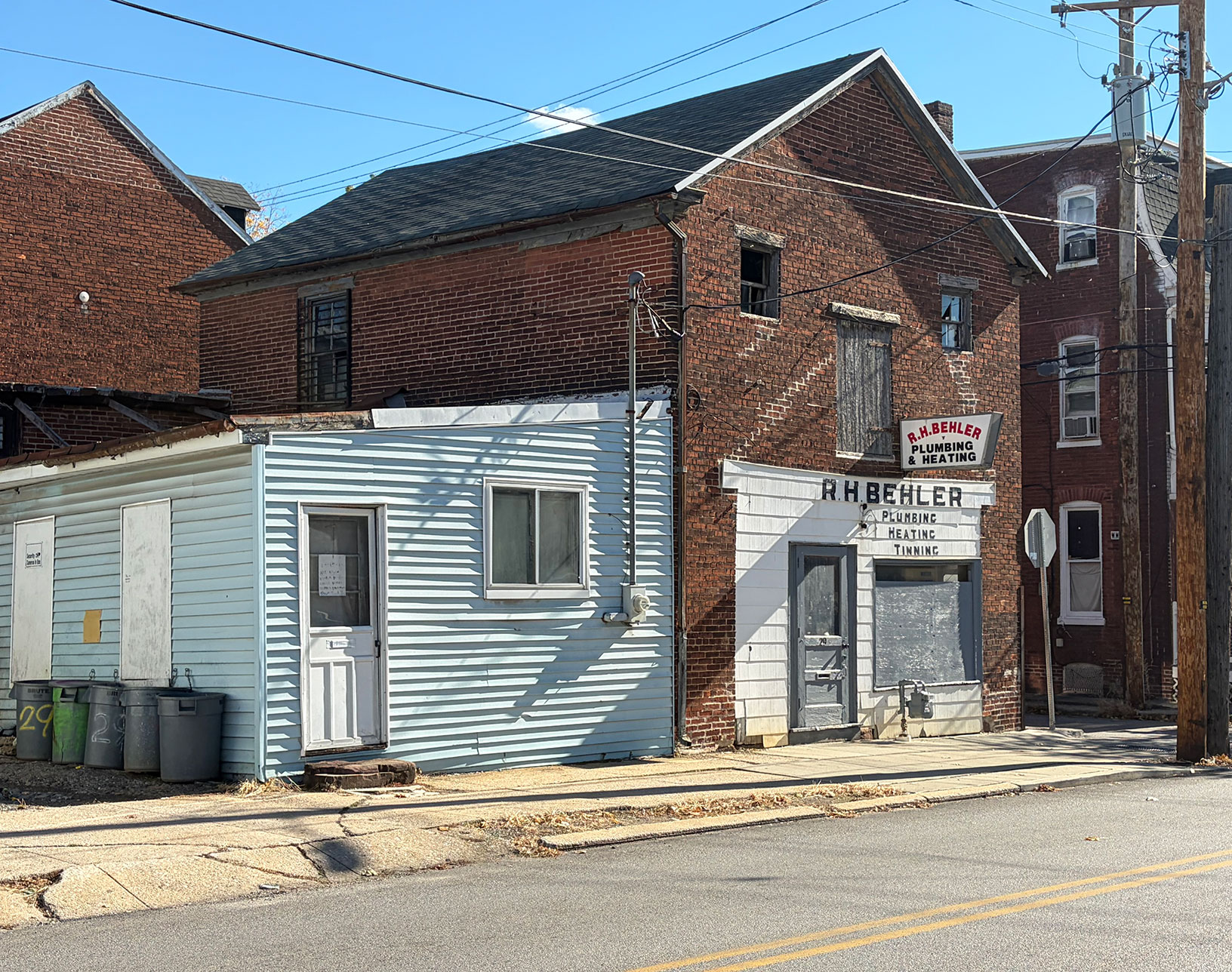
Main Street has survived many eras of taste and trends, shifting economic forces and preferences of style. Changing beliefs about architectural preservation have also transformed the appearance of Main Street; if a Main Street hasn’t been purged of much of its history due to sterile plans for improvement, it is a corridor lined with layer upon layer of information about who has done business here and what they believed would appeal most to customers. The scale and richness of the town hall tells us much about the beliefs of the citizens. Main Street is a rich visual record of America. The photographs of Still Life on Main Street zero in to find revealing traces of those layers; and in some cases the lens steps back, allowing viewers to draw together their own histories based on the scattered evidence.
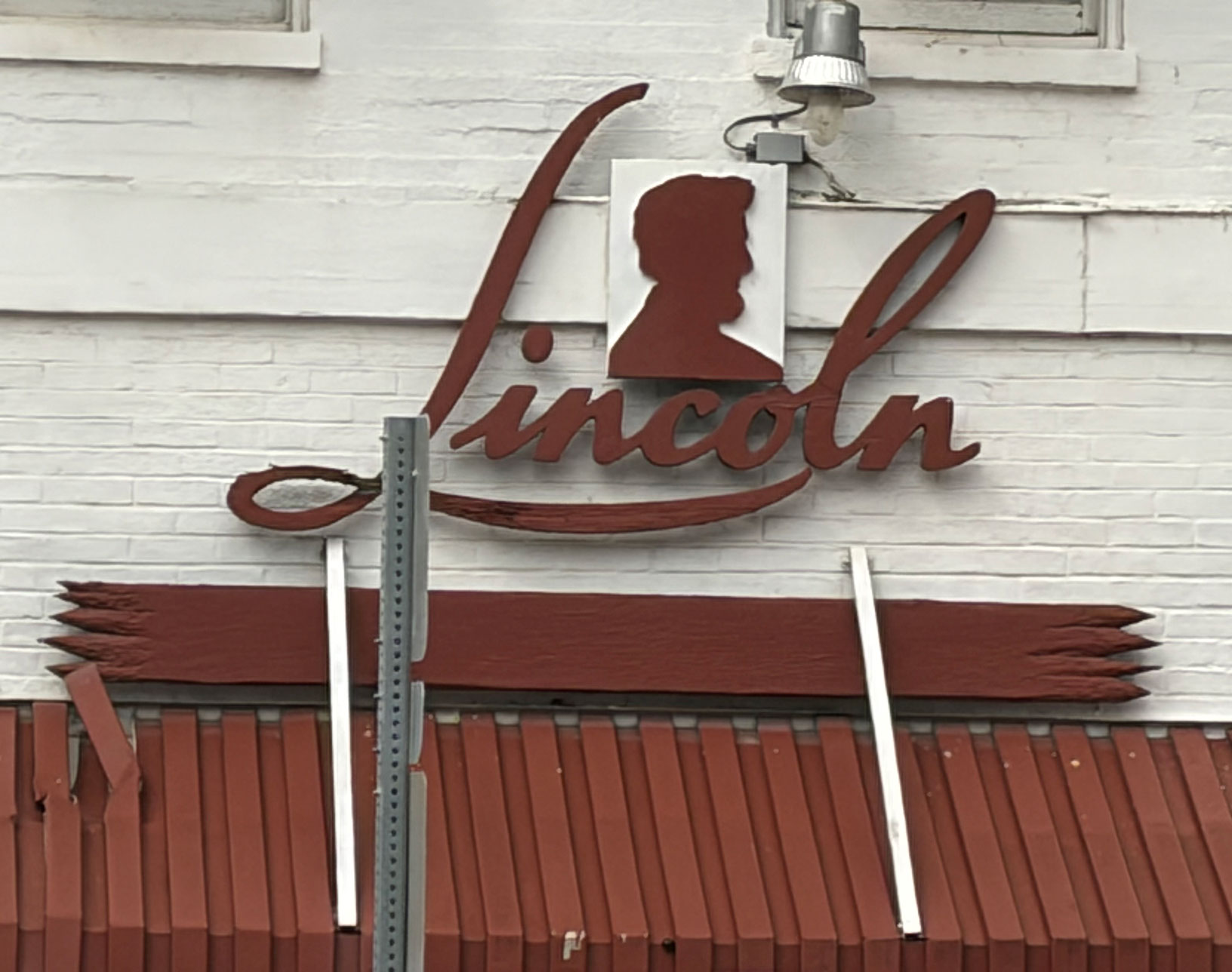
Increasingly rare artifacts along Main Street are the painted or electric signs, relics of a pre-digital age that were often eliminated by new codes and radical swings in public opinion regarding advertisements. These business signs are perhaps the clearest and most direct record of the history of Main Street, evidence of who operated businesses and what appealed most to customers. Photographs are extremely useful in helping us envision the very active, visually messy Main Street of yesterday, but few things make the distant past real for us quite so vividly as the electric signs. These elaborate artifacts were once abundantly distributed along the street, but many were removed due to code changes, government disincentive, or business attrition. The photographs of Still Life on Main Street sometimes capture streets where these signs still exist, where they convey important information about the forces and choices that defined this commercial thoroughfare. They often serve as landmarks identifying the sites of important retailers or dining establishments as well as illuminate our understanding of pre-War and midcentury popular culture. Often, they identify and celebrate historic figures from local history. Currently, the great void left along the once fully animated streets by the sign purging of the 1970s and 1980 merits a powerful reverence for the few that remain. It also warrants greater respect for the signs that have been saved but were removed from their original sites.
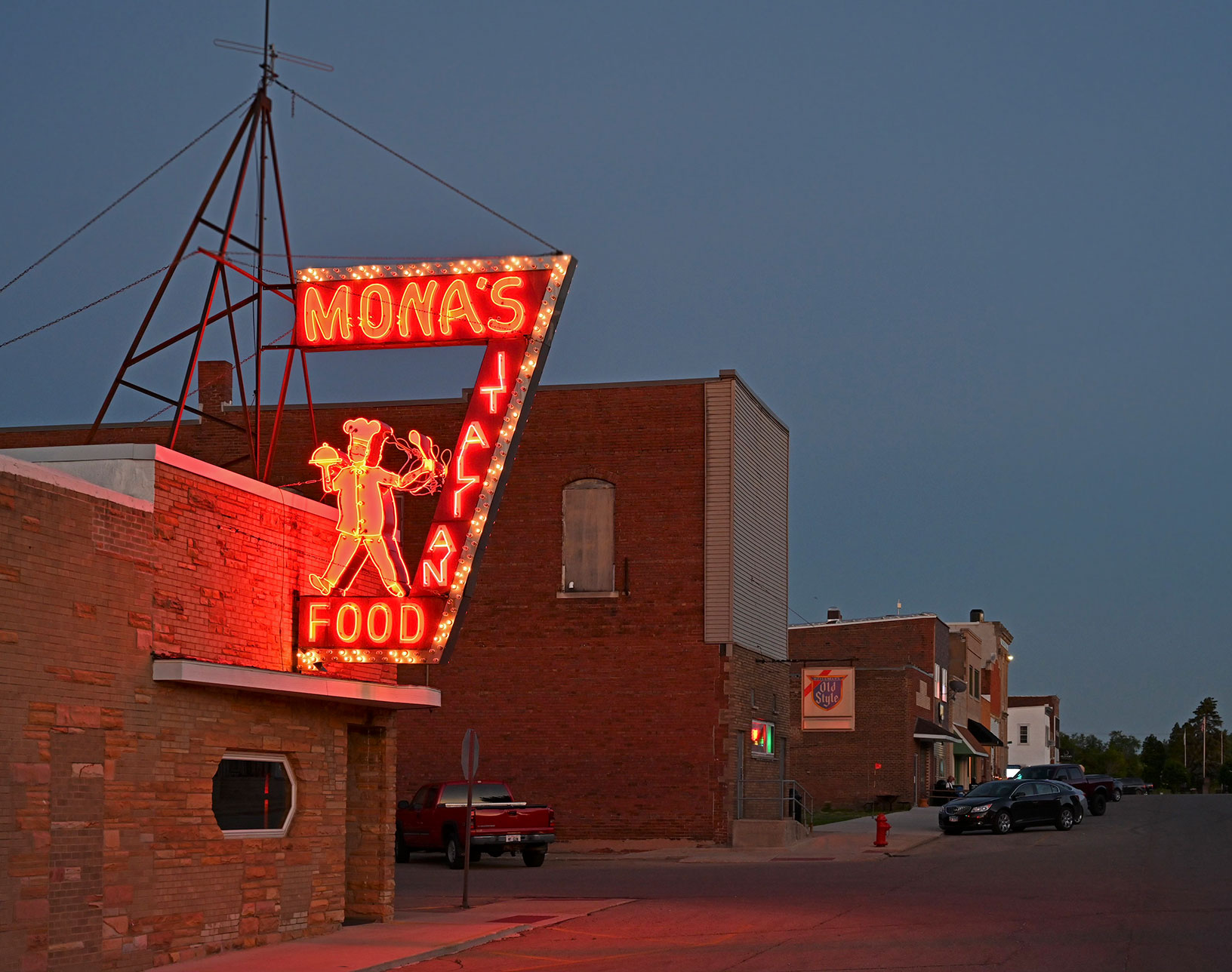
If Eye on Main Street and Still Life on Main Street seek a reappraisal of the value of Main Street, a large artifact like a neon sign has the potential to impress upon the viewer the character, integrity, and skill for fabrication that once existed. The neon sign gave real visual power to the commercial street as it attempted to lure customers and persuade them to buy or to be seated. These were not the ultra-polite identifications of present-day Main Street. The signs often communicated through more means than those that first met the eye. They denoted the business name and the product(s) on offer, but also connoted much more, through design — a sense of style and quality. The great financial investment that went into these signs conveys something important about pride and stability. These signs were a far cry from the vapid graphics of today, most often derived from digital manipulation of art procured online. They were products of what was sometimes a fevered imagination, an attempt by the designer to outdo the designer of the next sign company and the illuminated sign competition nearby. By hand the sign designer drew up a concept that would aim to give a vivid impression of the particular worthiness of each business.
As the highway strip into and out of town emphasized the post-War turn to corporations, with their repetitive pole signs for chains and national oil companies, Main Street remained a place that celebrated the individual and small business with unique, one-off, hand-crafted graphics. Seeing historic signs at full scale emphasizes one of the most important aspects of Main Street: its historic relationship to individuals. Experienced up close and not merely in a soft-focus vintage photograph, the sign clearly demonstrates the rich, complex craftsmanship that went into producing such an artifact. Signs of random, angular or curvaceously organic form underscore an artist who drew by hand. The unique metal sign box with its joints and amalgamation of pieces, parts, and panels reveals the existence of a careful craftsman. The many intricate twists and turns of neon tubing, all formed by the breath and skillful hands of a tube bender, remind us of the countless hours and risk taken in the face of dangerous heat.
Eye on Main Street and Still Life on Main Street aim to give dimension and specificity to our flat, pale, remote understanding of what Main Street is and was. The photos of Still Life employ rich, high resolution as well as unusual perspectives and atmospheric lighting to reach beyond the tropes and foggy vagueness many people have for a place that they have probably never personally experienced or have not visited in many years. The book emphasizes the three-dimensional (real, today) over the two-dimensional (corporate or Hollywood fabricated). The films and publications of Eye on Main Street will make great strides toward this goal of making vivid and tangible what is too often naïve and superficial. Museum exhibitions incorporating full-scale 3-D artifacts and models will also be a powerful means to provide something honest and truthful to readers and viewers who are admittedly disconnected from the beautiful, complex reality of the current state of Main Street. And best of all, neon signs restored and returned to the streets will help flesh out our understanding of a place that America appears to have left behind, but to which it is perhaps more than ready to return.